
VisiTails
We Can Track Dogs by Satellite. Why Are Pet-Sitting Updates Still Lost in WhatsApp?
VisiTails is an attempt to turn scattered photos, care confirmations, and messages into one private report. But first, I want to know whether this is a problem other owners and sitters actually have.

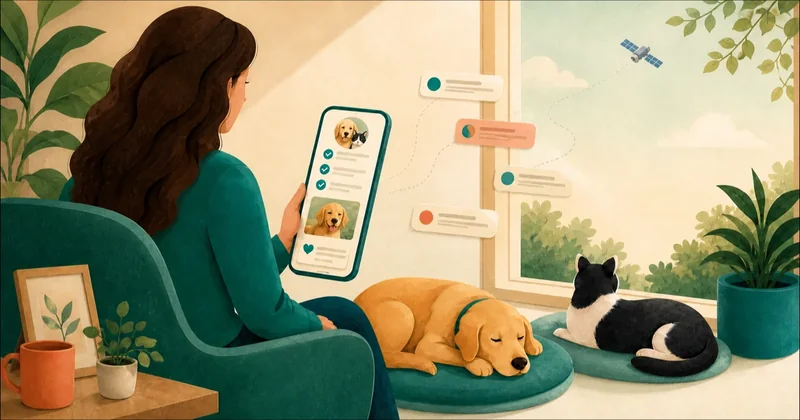
VisiTails is an attempt to turn scattered photos, care confirmations, and messages into one private report. But first, I want to know whether this is a problem other owners and sitters actually have.
On July 8, 2026, Fi launched a dog tracker that combines GPS, cellular connectivity, and T-Satellite with Starlink. The idea is that owners can locate their dog even beyond the reach of an ordinary mobile network. Earlier in the year, PETKIT introduced feeders and water fountains with AI-powered cameras capable of recognizing individual pets and recording when they eat or drink. (Tom’s Hardware; PETKIT)
Pet technology is becoming extraordinarily sophisticated.
A dog can now be tracked through space. A water fountain can identify which pet took a drink. A feeder can record whether a meal was eaten.
But leave your pet with another person for a week, and the reporting system may still look something like this:
A photo arrives through WhatsApp in the morning.
“Fed and walked” appears in a text message several hours later.
A medication confirmation is buried between unrelated messages.
A video arrives by email because it was too large to send elsewhere.
Someone else helping with the pet posts an update in a different group chat.
Nothing about this necessarily means the pet is receiving poor care. In many cases, the sitter is doing everything correctly and sending plenty of updates. The problem is that the information has no structure.
By the fourth or fifth day, the owner has received a lot of communication but may still have difficulty answering simple questions:
- Was the evening medication given every day?
- When did the dog last eat?
- Did the sitter mention that the cat was hiding yesterday or today?
- Which photos came from which visit?
- Did someone complete the litter-box task, or did they only acknowledge the message?
The problem may not be too few updates
Pet owners and sitters appear to agree that communication matters. They do not necessarily agree on what good communication looks like.
Recent pet-sitting discussions include owners wondering whether it is unreasonable to expect a report and photos after each visit. Sitters frequently respond that some form of visit report is standard professional practice. Other discussions emphasize agreeing in advance on the number of updates, the preferred channel, medication instructions, and the information that should be kept together. At the opposite extreme, sitters describe clients expecting new photos every two hours, even when the pet has simply been sleeping. (Reddit)
That suggests the answer is probably not more messages.
It is a clearer agreement about what will be reported, followed by an easier way to report it.
The distinction matters because a conversation and a care report serve different purposes.
A conversation is good for immediate questions:
- “Where are the extra food bags?”
- “Is it normal for him to refuse breakfast?”
- “Should I call the vet?”
A report is better for preserving what happened:
- The pet was fed at 8:15 a.m.
- Medication was given.
- The water bowl was refreshed.
- The dog was walked.
- Two photos and a note were added.
- One care item still needs attention.
Both are useful. They simply should not have to be reconstructed from the same endless message thread.
The large platforms already understand the value of reporting
Rover supports photo and video updates through its messaging system, while Rover Cards can preserve a walk route, time, distance, photos, a message, potty breaks, and food or water activity. That makes sense: updates are not just a pleasant bonus. They are a major part of the reassurance owners are purchasing when they hire someone to care for a pet. (Rover photo updates; Rover Cards)
But not every pet-care arrangement begins on a marketplace.
Sometimes the caregiver is an independent sitter with their own clients. Sometimes it is a walker found through a local recommendation. Sometimes it is a friend, neighbor, relative, house sitter, or combination of several people.
Those arrangements may not need booking software, payment processing, staff scheduling, invoicing, marketing tools, or a complete pet-sitting business platform.
They may only need one private place where a caregiver can record what happened and let the owner see the update clearly.
That is the problem VisiTails is trying to solve
VisiTails is a private pet-care reporting app built around one visit at a time.
The report author records the pet’s name, the visit time, a summary, wellbeing and care notes, and up to four photos. When the report is ready, they can finalize it and share one private, revocable web link that the owner can open without creating an account.
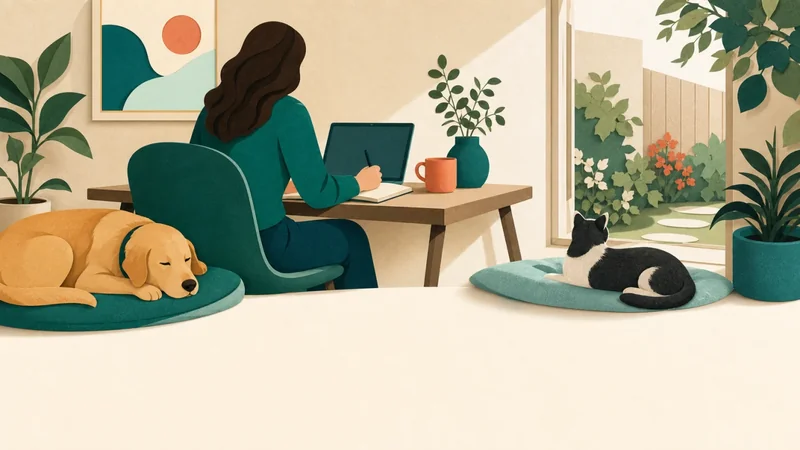
Instead of repeatedly sending some version of “How is everything going?”, the owner can open the link and see the visit information together. The photos stay connected to the report in which they were taken, and the notes remain beside the date, time, pet, and author they relate to.
The goal is not to monitor the caregiver every minute.
It is to make a good visit update easier for both sides.
It could also be useful for independent pet sitters
A professional sitter may already have a personal routine for client updates: take several photos, write a summary, confirm food and medication, then repeat the process for every client.
Some sitters use dedicated business software. Others create templates in Notes, maintain spreadsheets, fill out PDFs, or manually compose messages at the end of every visit.
VisiTails is intended to provide a middle ground: a polished, repeatable client report without requiring the sitter to move their entire business into a large management platform.
A sitter can create a report for each visit and send the owner its private link. The report itself becomes part of the service: not only was the pet cared for, but the owner receives an organized record showing how the visit went.
The current first version is free while I learn whether this simple report is useful. If the product grows beyond one-author visit reports, one option I am testing is a single US$29.99 lifetime purchase for the person creating reports, rather than another recurring subscription.
What VisiTails is not trying to become
VisiTails is not another marketplace for finding sitters.
It does not handle bookings or payments. It does not rank caregivers. It is not a surveillance camera, GPS collar, or replacement for calling the owner when something urgent happens.
It is focused on the period after someone has already agreed to care for a pet:
What happened during the visit, and how is the pet doing?
That sounds like a small problem compared with satellite tracking and AI health monitoring.
But small problems repeated every day can create a surprising amount of anxiety and administrative work.
The American Pet Products Association reports that 95 million U.S. households owned at least one pet in 2025. It projects total American pet-industry spending will reach $165 billion in 2026, including $14.9 billion in other services such as boarding, grooming, pet sitting, pet walking, and pet insurance. (American Pet Products Association)
As pet care becomes a larger and more professional industry, perhaps the humble sitter update deserves better infrastructure too.
But is this actually a problem for you?
This is the part where I would rather hear about real experiences than assume the solution is correct.
When someone else looks after your pets, how do you currently exchange instructions and updates?
Do you use WhatsApp, text messages, email, shared notes, printed instructions, a pet-sitting marketplace, business software, or something else?
Do photos and care confirmations become difficult to find during longer stays, or does an ordinary message thread work perfectly well for you?
For sitters and walkers: does preparing client updates feel like an important part of your service, an administrative burden, or both? Do you already have a system that works?
And for everyone involved: who should create the report—the owner or the sitter? What would a useful report absolutely need to include? Would a private web link be enough for occasional caregivers, or would they install an app?
Would shared contributors, care-item checklists, and a multi-day timeline make the report substantially more useful, or would they turn a simple update into more work?
Finally, does a US$29.99 lifetime purchase feel more appealing than another subscription, or would you expect a reporting tool like this to be free?
I am not looking only for “great idea” responses. I would especially like to hear from people who already have a better solution, tried a reporting app and abandoned it, or simply do not experience this problem.
Pet technology can already tell us where a dog is, when a cat drank, and how much food was left in a bowl.
I am trying to find out whether it can also give owners a better answer to one much more ordinary question:
How did today’s visit go?